Lessons learned from Baltimore
As I’ve mentioned, I came away from the Baltimore Marathon with a lot of things to say. I wanted to keep my race report to the point and focus on how I felt at the time – I had to let things sink in, as well as taking time to celebrate getting a sub-4 marathon.
It’s important to me to write these things down to make the next race experience of any distance even better.
Study the course map
I knew Baltimore had hills, but I got overconfident that my constant hill running would make those hills look small. That’s partly true, but the hills in the marathon were a lot different. They were longer in distance with gradual climbs; while the hills I usually run on have a steeper grade, they’re not as long when it comes to distance. Just look at the first few miles of my Garmin data with that steady climb.
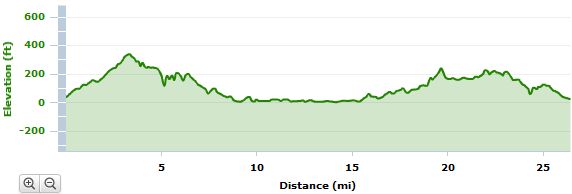
Had I looked at the map closer, I would have ran more mountains or found roads that had hills longer than a half mile.
Longer short runs
If When I train for a marathon again, I need to incorporate the “middle” distances more. While training in the heat was highly beneficial this summer, I didn’t have enough distances in the 6-8 mile range. I definitely had benefits of doing doubles a few times, but from an endurance perspective, I need more longish runs mid-week.
Cross training
I still need to cross train more, especially with weights. I have drastically improved my routine with core work and some weights at least once a week, but I need to do it twice a week. All that made a huge difference this time around, but I believe with more I’ll only be stronger in the final miles.
Start even slower
I need to start farther back. I still feel like I ran the race I wanted to – I didn’t start too fast and I never felt like I hit a wall. However, I wish I had started a little farther back to slow down a little bit more in the first few miles. My first 3 miles were 10-15 slower than my goal pace at 8:36, 8:35 and 8:45, but I feel like I should have been a little slower. Between mile 3 and 4, I passed the 3:40 group, who I thought was going too slow, but obviously they were doing something right.
I should have started near the 4-hour pace group and been more conservative. I can’t beat myself up for that – with the way the wind was that day coupled with my cold, I don’t know if that would have made any difference with how I felt around mile 22.
Wind training?
I need to train in the wind. In the fall and winter that’s easy, but in the calmer summer months I’m not sure what to do.
* * *
So there you have it. There are no failures with running — it’s always about learning lessons and make it better next time around. As for “what’s next,” I’ll have a post on that … eventually.


 RSS
RSS Facebook
 Twitter | Web site by Matt Busse

Wind training? Seriously? Get some resistance bands, put them around your core, and try to run away from it? Or. heh, POOL running.
All that would be good for strength and endurance for sure, but wind is a different beast as it changes direction and impacts the whole body. Running in a NASCAR wind tunnel would be a better alternative. Sent from my Verizon Wireless BlackBerry
Great lessons learned David. Not sure how to practically implement wind training (move to Chicago?), but it's an interesting idea. Well done man, well done.
My recent post Sitting All Day is Bad For You, So What’s a Tired Runner To Do?
They have those parachutes that you strap onto your waist. Maybe that will give you some "wind training" and strengthen the legs.
I love your closing thought - there are no failures in running, only lessons to learn from. Even though it sounds like you ran a smart race, there's always room for improvement. (And I remember passing the 3:30 pace group near the beginning of one of my marathons and wondering why they were going so slow, but the reason became obvious when they cruised past me several miles later!)
The weird thing is I never saw that 3:40 group again, nor did I eversee any else in any other group. They were easily identifiable. Iquestion that if I had started slower, would the wind have slowed medown even more later? I'll never know and I don't second-guess mydecisions for long. I think it's the unknowns with this distance thatkeep me coming back for more.
Great post! We never know what would happen with the what ifs but I love that runners find a lesson in each race, each run and then share them.
My recent post Off Season?
Great post! All excellent points. I wish I had known better about the hills too. I'm already a slow runner, but I wish I had run even slower in the beginning too. My husband and I definitely started out too fast and even though our pace really wasn't that fast, it was too fast considering how much uphill we were facing in those first miles. I think that tired us out a bit sooner.
My recent post Marathon lessons learned
Great post. You can train near the coast for some wind, we always have it here!
Seriously though I love reading your post race recaps/thoughts/opportunities, etc… I'm trying to find that perfect balance between cross training and running myself.
Interesting thoughts about the race. I'm still a novice myself, but my sense is that there's only so much detailed planning and training you can do. IMO the more important thing is getting a better sense of your own tendencies (do I start too fast and tire out?) and a feel for what your body is telling you during the race.
For me, I basically went into Baltimore thinking I'd optimistically run about 9:30 miles, giving me about a 4:15. I knew it was important to start slowly, with the long uphill, so I started with the 10 minute mile group. At mile 4, I felt like I was just getting warmed up and I knew I had about 6 miles of downhill and then a lot of flat road ahead, so I picked it up a step without really paying much attention to the clock. It wasn't until I reached the half, feeling really strong, that I looked and realized I was on pace for a sub-4. And at that point I knew, based on how my body was feeling, on my general tendency to run negative splits, and remembering the elevation profile of the course, that I was going to be able to do it. I just kept telling myself to focus on getting to 20, where I'd down a gu and know that it was all downhill from there.
Eric, thanks for the comment and congrats to you. Sounds like you had a great approach. Marathons are so interesting to me with the different ways that people approach them. It's such a tough distance to figure out.
[...] lessons learned could help you prepare for your next [...]